




Transforming medicine and changing lives
January 8, 2026
AskBio Announces FDA Acceptance of Investigational New Drug (IND) Application for AB-1009 Gene Therapy for Treatment of Late-Onset Pompe Disease (LOPD)Durham, N.C. – JANUARY 8, 2026 – AskBio Inc. (AskBio), a gene therapy company wholly owned and independently operated as a subsidiary of Bayer AG, today announced that the United States Food and Drug Administration (FDA) has accepted its Investigational New Drug (IND) application for AB-1009, an adeno-associated virus (AAV) gene therapy being developed for the treatment of late-onset Pompe disease (LOPD). With this announcement, the AB-1009 program advances to Phase 1/Phase 2, and AskBio has initiated a clinical trial in the United States to explore the safety of AB-1009. The company anticipates recruiting its first patient in early 2026. “This investigational gene therapy is being studied for its potential to address the underlying genetic defect and to explore whether it can increase production of the deficient enzyme in patients with Pompe disease,” said Tahseen Mozaffar, MD, Director of the UCI Health ALS & Neuromuscular Center, and Principal Investigator, AB-1009 Clinical Trial Program. “Patients receiving gene therapy may reduce reliance on exogenous enzyme replacement. AskBio’s approach leverages its experience in gene therapy development as it seeks to advance treatment options for Pompe disease.” In addition to the initiation of the AB-1009 PROGRESS-GT LOPD (NCT07282847) clinical trial program, the therapy was recently granted FDA Fast Track and Orphan Drug designations. The FDA Fast Track process is designed to facilitate the development and expedite the review of new therapeutics that are intended to treat serious conditions and fill unmet medical needs.1 The purpose of the process is to get important new therapeutics to patients earlier.1 Therapeutics that receive this designation benefit from eligibility for more frequent meetings with the FDA to discuss the clinical development plan and, if relevant criteria are met, eligibility for Accelerated Approval and Priority Review. Orphan Drug Designation provides orphan status to drugs and biologics for rare diseases that meet certain criteria and potentially gives a company exclusive marketing rights for a seven-year period, along with other benefits.2 “These advancements in the AB-1009 program, particularly the recently granted regulatory designations, highlight the recognized need for late-onset Pompe treatments,” said Mansuo Shannon, PhD, Chief Scientific Officer, AskBio. “Today’s news demonstrates AskBio’s commitment to progressing early-stage assets into the clinic and adding those to our clinical portfolio.” Pompe disease is a rare, progressive, debilitating genetic disorder that is estimated to affect at least 5,000 to 10,000 people worldwide.3 Pompe disease ranges in severity from infantile-onset Pompe disease (IOPD) to LOPD.4 LOPD is associated with significant morbidity and is characterized by progressive skeletal muscle weakness and respiratory insufficiency.5 Patients typically present with progressive proximal myopathy; however, respiratory involvement can be the primary presenting clinical feature.5 This causes severe muscle weakness and wasting, leading to the loss of mobility.5 The disease can lead to premature death from respiratory failure.5 Today, there are multiple approved enzyme replacement therapies (ERTs) with recombinant human acid alpha-glucosidase (rhGAA), and these are chronically administered.4,5 These can also be used in combination with a small-molecule pharmacological chaperone treatment.6 There remains an unmet medical need, as some individuals receiving ERT ...read the news
We are on a never-ending quest to advance genetic technology
and AAV gene therapy
In 1984, Dr. Jude Samulski, one of AskBio’s visionary founders, asked if a virus could be used to target genetic disease. Researching this question cleared the path for historic advances in genetic medicine, and AskBio is helping to lead the way.
Advancing gene therapy
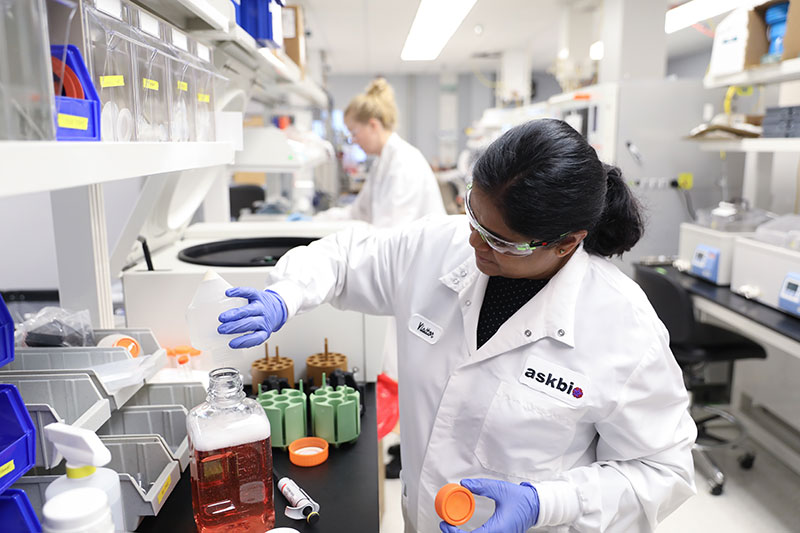
Treatments for life-altering diseases require new technology to lower the production cost of treatment and increase supply for patients who need it.
Changing lives
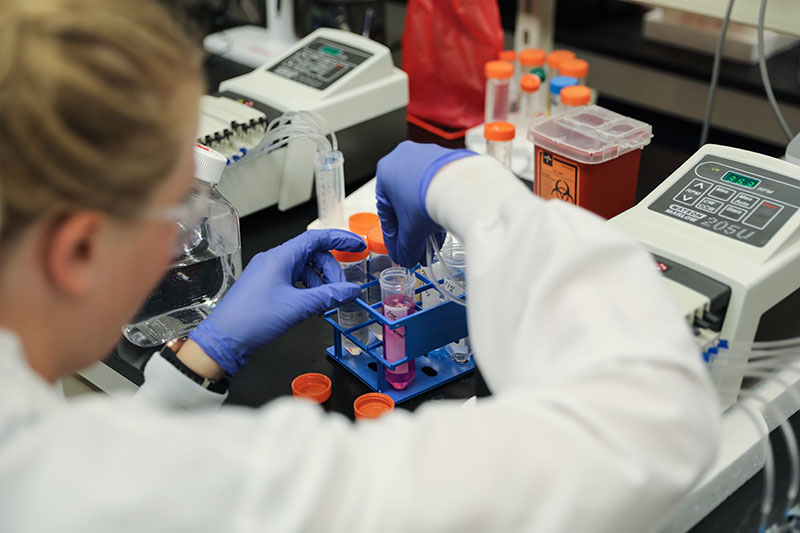
Our clinical pipeline is the direct result of listening to patients, their families, their care teams and disease-advocacy organizations.

Putting patient care first
The voices of patients drive everything we do. They propel our research and the urgent need to find treatments.

Work with us
Advancing research
Today’s genetic discoveries are some of the most awe-inspiring advances in medical history. We welcome collaboration with innovative minds in genetic R&D.
Building careers
Help transform the face of healthcare with potentially life-changing gene therapy. Every life enriched by our scientific advancements is a result of someone like you.